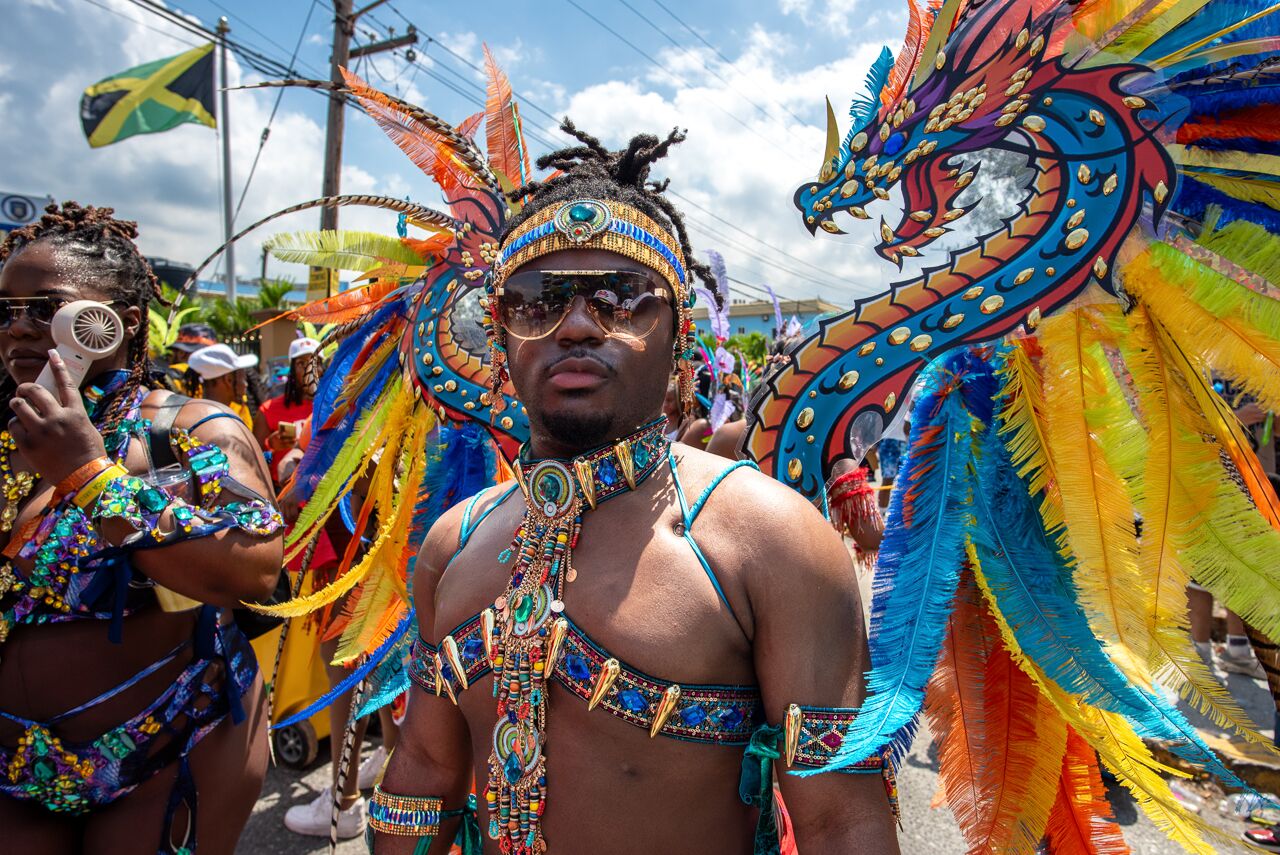
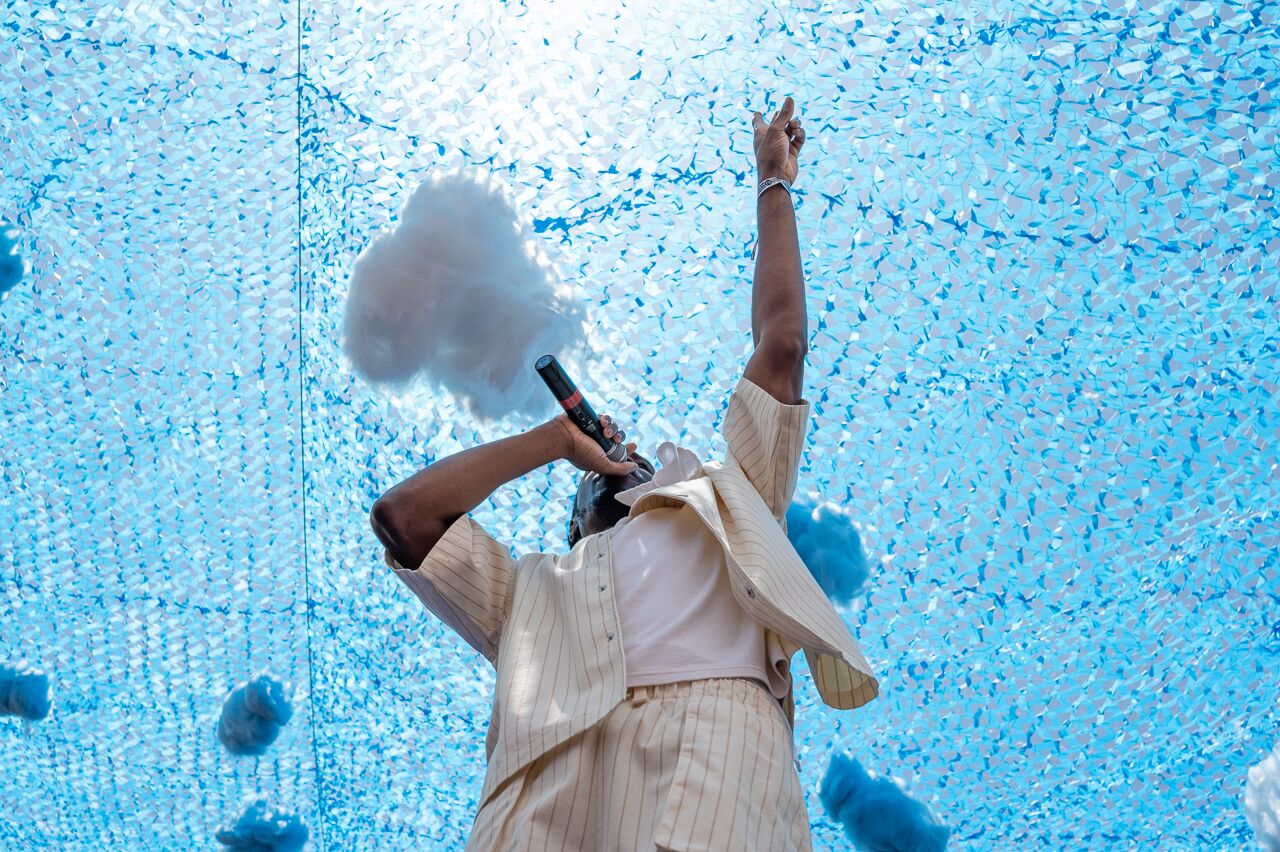
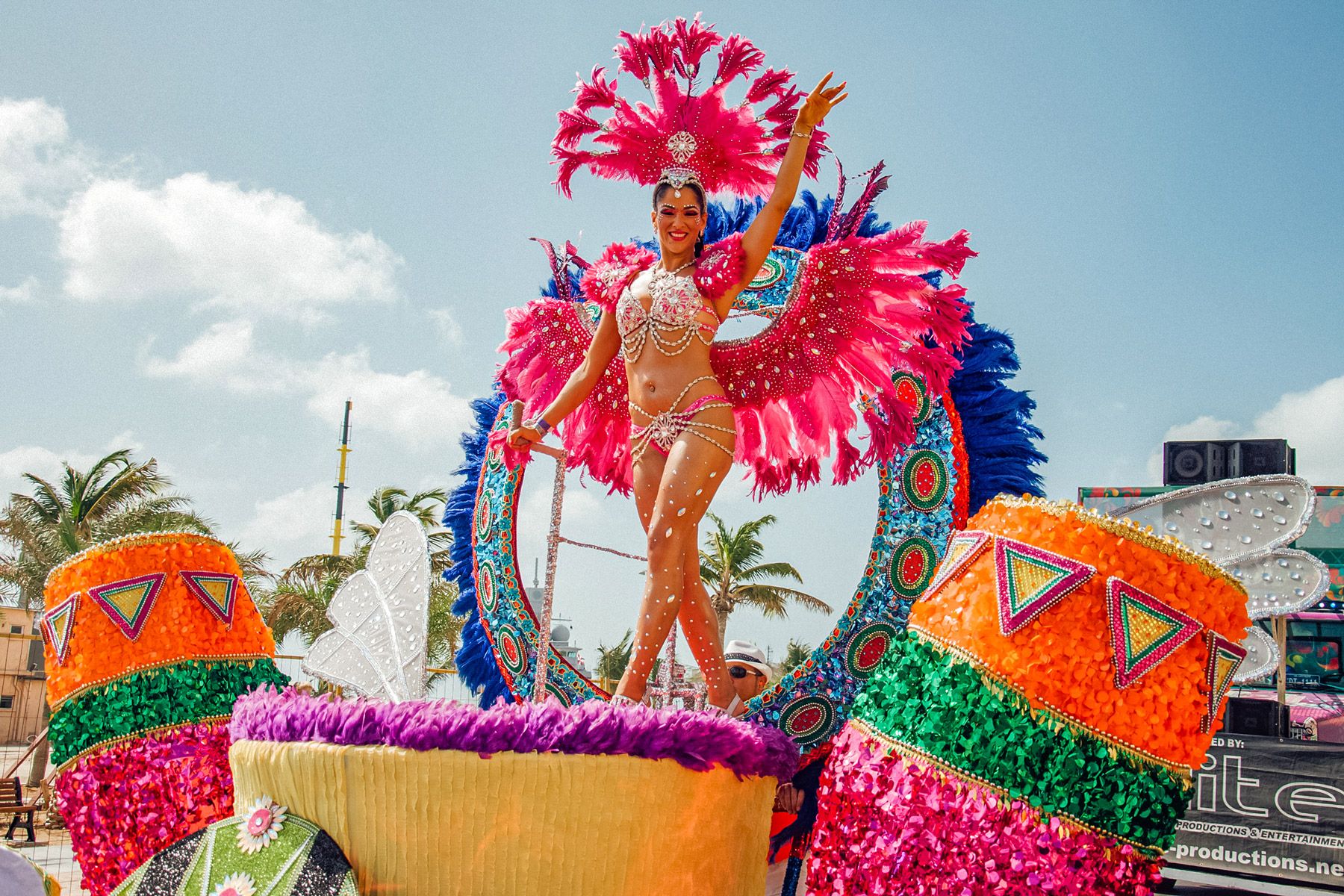
Jamaica Carnival, also referred to as Bacchanal Jamaica (also the names of Jamaica's longstanding bands), is an annual Caribbean Carnival event held mainly in Kingston, Jamaica, a week after Easter (usually during March or April). The festival is marked by week-long celebrations, fetes and entertainment events, which are a prelude to the official Mas or Road March finale on Carnival Sunday. The Road March is known for its parades of local and international revellers in vibrant costumes, bands, carnival trucks, live performances, dancing and other festivities. Other smaller road marches and carnival events take place in Ocho Rios, Montego Bay and Negril. The event is traditionally associated with calypso music and soca music, however it has since evolved into a unique fusion of dancehall, reggae and soca revelry.
History
Origin
The origin of Caribbean carnivals can be traced back to French and Spanish colonialists, who introduced the early Italian Catholic tradition of Shrovetide celebrations to the Americas. In particular, by the late 18th century, French settlers brought carnival to Caribbean islands including Haiti, Martinique, St Lucia, Trinidad et al., as a pre-Lenten Catholic celebration, involving masquerades and balls. Over time, slaves adapted elements of their cultures and indigenous cultures into these European celebrations, which became part of their tradition and evolved with dancing, costumes, songs and particular styles of music.
Jamaican carnival culture roots
Jamaica's history of Spanish and British colonialism, contributed colonial era, religious and post-emancipation celebrations, from which some of Jamaica's oldest parades, music and dance forms emerged. These include quadrille and jonkunnu, a Christmastime festival— both of which also entail masquerades, characters, costumes, music and dancing that depict fusions and adaptations of elements from European and African cultures. Other local Creole folk traditions including mento (sometimes called mento calypso or Jamaican calypso), which bears similarities to other Greater Antillean genres that also use the rumba box, were often featured at cultural celebrations and festivals.
UWI Carnival
With the opening of the University of the West Indies, Mona, in the late 1940s, carnival culture from the Eastern Caribbean spread to Jamaica. This was due to the migration of Eastern Caribbean students, who recreated their celebrations on the university's campus, bringing steel pan music and organizing costume bands— a tradition that became popular in the mid-1950s, which continues on the campus to date.
In the early years, the Halls of Residence became the focus for carnival activities, with some halls having steel bands, and costume bands being key aspects of carnival for the halls. Hall residents started creating individual or group costumes independently. In the mid-1980s, a special hall committee decided the themes and sections for the halls’ bands, and organized the costume-making.
Events included Carnival Queen Show on Friday night, Ole Mas (masquerading) on Saturday morning, and the road march of costume bands on Saturday afternoon, in the Mona Heights and Ring Road vicinities. By the 1980s and early 90s, the carnival expanded to more than a week, including events such as Poolside Lyme, Reggae/Calypso Show, Costume Show and Firs’ Lap, where the parading and judging took place. This was followed by an Out-of-Town Lime, with the carnival ending on Shrove Tuesday with a Las’ Lap finale. Currently, UWI Carnival takes place around mid to late March, and includes Integration fete, J’Ouvert, Ring Road and Beach Party.
See also
- Carnival
- Mento
- Jonkonnu
- Byron Lee and the Dragonaires
- Bacchanalia
- Labor Day Carnival
- Notting Hill Carnival
- Caribana
- Brazilian Carnival
- List of Caribbean carnivals around the world
References
External links
- Bacchanal Jamaica
- Visit Jamaica (Jamaica Tourist Board)- Carnival Calendar
- Visit Jamaica (Jamaica Tourist Board)- Carnival In Jamaica
- Sandals- Jamaica Carnival Experience